
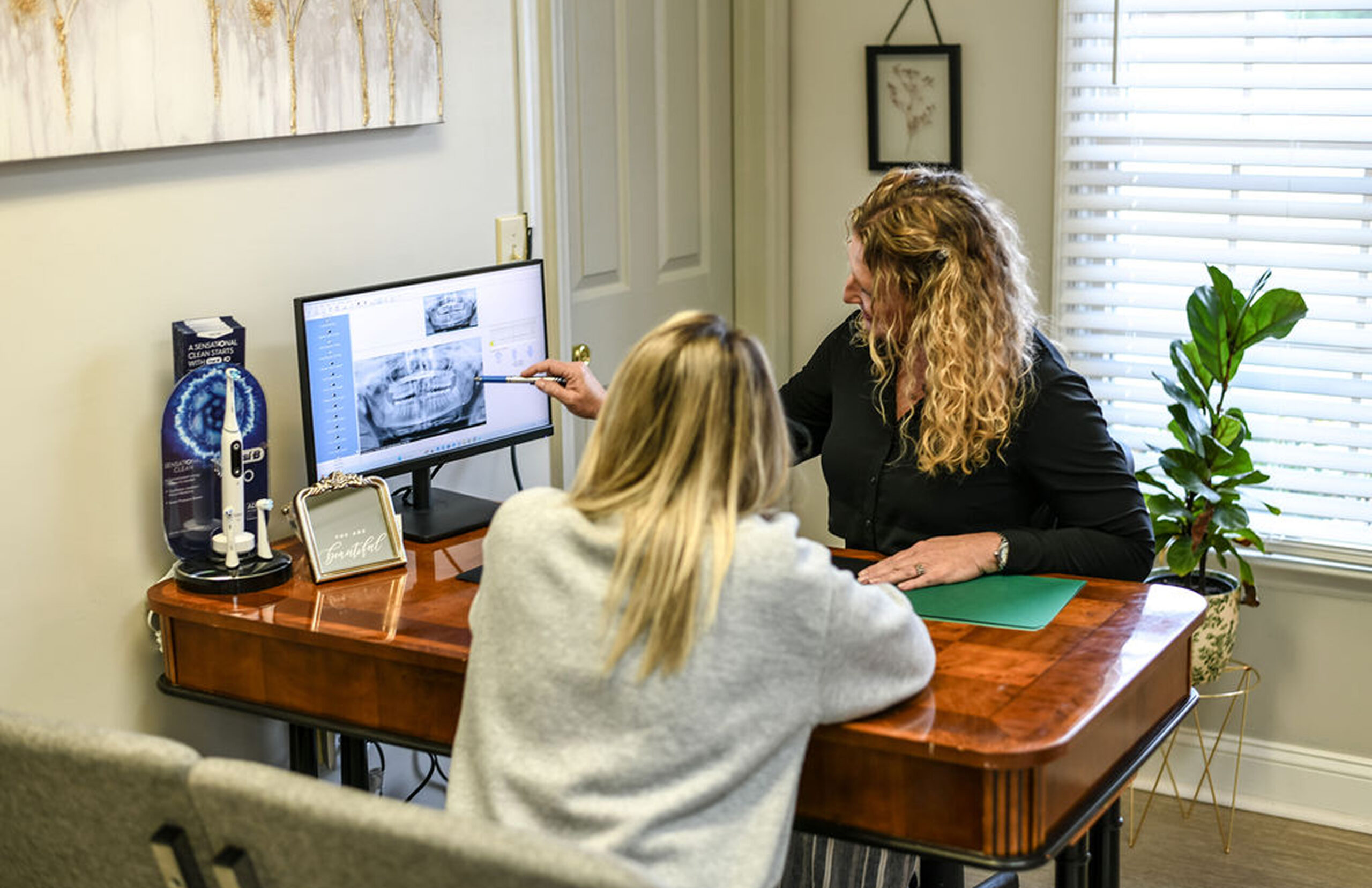
Dental implants typically cost between $3,000 and $6,000 for a single tooth, including the titanium post, abutment, and custom crown. This range reflects what most patients can expect, though pricing varies by location, provider expertise, and the complexity of your case. Understanding what drives these costs helps you plan with confidence.
Dental implants work differently than other tooth replacement options. Rather than sitting on top of your gums like implant-supported dentures or relying on neighboring teeth like bridges, an implant replaces the actual tooth root. A small titanium post is placed directly into your jawbone, where it fuses with the bone over several months. This creates a stable foundation for a custom crown that looks, feels, and functions like a natural tooth.
Pricing generally aligns with national averages, though you’ll find some variation between large metro practices and smaller cities. The good news? You don’t need to travel far to find quality care at reasonable rates close to home.
What Are Dental Implants and What Do They Cost?
Dental implants are titanium posts surgically placed into the jawbone to replace missing tooth roots. Once integrated, they support a crown, bridge, or full-arch restoration that looks and works like natural teeth. For a single tooth, total costs usually run $3,000 to $6,000, while full-arch solutions can range from $20,000 to over $60,000 depending on the system used.
Unlike removable options, implants stay fixed in place and help preserve bone structure over time. They’re considered one of the most reliable long-term tooth replacement options available in dentistry today, with documented success rates above 95% according to the American Academy of Implant Dentistry. The upfront investment is higher than alternatives, but the longevity and quality-of-life benefits often make implants the most cost-effective choice when measured across decades of use.
At Hayslip Center for Family & Cosmetic Dentistry, your treatment plan is built around your specific anatomy, goals, and budget, with transparent pricing from the start.
What Goes Into the Total Cost of a Dental Implant?
A typical single dental implant runs $3,000 to $6,000 total, broken across three main parts: diagnostic imaging and planning ($200-$500), the surgical placement and implant post ($1,500-$3,000), and the abutment plus custom crown ($1,000-$2,500). Additional procedures like extractions or bone grafting can add to the total depending on your starting point. Knowing what you’re paying for helps you compare estimates and avoid surprises.
Diagnostic imaging and treatment planning
Diagnostic imaging and treatment planning runs between $200 and $500. This includes digital X-rays and often a 3D CBCT scan, which gives your dentist a detailed view of your bone structure and nerve pathways. Imaging like this is essential for planning precise implant placement.
Surgical placement of the implant post typically costs $1,500 to $3,000. This covers the titanium implant itself, the surgical procedure, and immediate post-operative care. Practices using guided surgery technology may charge more, but the precision often means faster healing.
The abutment and custom crown
The abutment and custom crown add another $1,000 to $2,500. The abutment connects the implant to your visible tooth, while the crown is custom-crafted to match your natural teeth in shape, size, and color.
Some patients need additional procedures before implant placement:
- Tooth extraction: $150-$400 per tooth
- Bone grafting: $300-$800 per site
- Sinus lift: $1,500-$3,000
- Sedation or IV anesthesia: $200-$600
At Hayslip Center for Family & Cosmetic Dentistry, we provide detailed treatment estimates that break down each component so you know exactly what to expect.
Are Dental Implants Worth the Cost?
Implants cost more upfront than bridges or implant-supported dentures. But when you look at the full picture, they often prove more economical over time.
How Long Do Dental Implants Last?
Longevity stands out as the biggest advantage. With proper care, dental implants can last 25 years or longer, according to data cited by the American Academy of Implant Dentistry. Many patients keep theirs for life. Compare that to bridges, which typically need replacement every 10 to 15 years, or removable prosthetics that require relining and eventual replacement.
Why Does Bone Preservation Matter?
Bone preservation matters more than most people realize. When you lose a tooth, the jawbone beneath it starts to shrink. This happens because the bone no longer receives stimulation from a tooth root. Implants are the only replacement option that stimulates the bone like a natural tooth, helping prevent the sunken facial appearance that often accompanies long-term tooth loss.
How Well Do Implants Restore Function?
You get back most of your natural bite. Implants restore most of your chewing force, letting you enjoy the foods you love without worry. Those who wear removable prosthetics often struggle with certain textures and temperatures.
Are Implants Hard to Maintain?
Maintenance is simple. Brush twice daily, floss once, and see your dentist for regular checkups. No special adhesives, no nightly soaking, no extra steps to add into your routine.
Implant Options Compared: Single, All-on-4, and All-on-X
The right implant solution depends on how many teeth you need to replace. Here’s how the options compare:
| Treatment Type | Teeth Replaced | Price Range | Best For |
|---|---|---|---|
| Single implant | 1 tooth | $3,000-$6,000 | Individual missing teeth |
| Implant-supported bridge | 3-4 teeth | $5,000-$15,000 | Multiple adjacent missing teeth |
| All-on-4 (per arch) | Full arch | $20,000-$30,000 | Complete upper or lower replacement |
| All-on-6 (per arch) | Full arch | $24,000-$35,000 | Full arch with extra stability |
| Full mouth restoration | Both arches | $40,000-$60,000+ | Complete smile rebuild |
Single implants
Single implants make sense when you’re missing one tooth or several non-adjacent teeth. Each implant stands independently.
Implant-supported bridges
Implant-supported bridges replace three or four teeth using just two implants as anchors. This reduces the total implant count while still providing a long-lasting, fixed restoration.
All-on-4 and All-on-6 systems
All-on-4 and All-on-6 systems offer a different approach to full-arch restoration. Instead of placing an implant for every missing tooth, four to six strategically positioned implants support an entire arch of prosthetic teeth. The per-tooth cost drops significantly compared to individual implants.
Traditional removable prosthetics cost less initially, often between $1,000 and $3,000 per arch. But factor in adhesives, adjustments, relines, and eventual replacement, and the long-term costs climb. Many patients find that implant-supported options deliver better value over a decade or more.
Factors That Affect Your Dental Implant Cost
Several variables influence your final treatment cost. Understanding these helps you make sense of different quotes.
Number and location of implants: Upper jaw implants sometimes require additional procedures like sinus lifts due to bone anatomy. More implants naturally mean higher costs, though full-arch solutions offer economies of scale.
Bone density and grafting needs: If you’ve been missing teeth for a while, bone loss may require grafting before implant placement. This adds both cost and time to your treatment but creates the foundation for long-term success.
Implant and restoration materials: Titanium remains the most widely used material for implant posts, but zirconia (ceramic) options exist for patients with metal sensitivities. Crown materials range from porcelain-fused-to-metal to full ceramic or zirconia.
Sedation preferences: Local anesthesia is included in most surgical fees. Oral sedation or IV sedation adds cost but can make the experience much more comfortable, especially for anxious patients or complex cases.
Provider expertise and technology: Dentists with advanced implant training and modern technology like guided surgery systems often achieve better outcomes. According to the American Academy of Implant Dentistry, provider expertise significantly impacts implant success rates. At Hayslip Center for Family & Cosmetic Dentistry, our doctors bring advanced training in implant placement and reflect a commitment to ongoing education in this specialized field.
Geographic location: Large metro practices typically charge more than those in mid-sized cities. Traveling for care isn’t always necessary when providers with expertise practice closer to home.
Are You a Candidate for Dental Implants?
Most adults with one or more missing teeth qualify for dental implants. A few factors affect candidacy, and your dentist will review them during your initial evaluation.
Adequate jawbone density provides the foundation for implant success. If bone loss has occurred, grafting procedures can rebuild the area. Your dentist will assess bone volume using 3D imaging during your initial evaluation.
Healthy gums matter because active gum disease can compromise implant integration. Periodontal issues should be treated and stabilized before implant placement.
Tobacco use significantly impacts healing. Smoking restricts blood flow to the surgical site and increases the risk of implant failure. Patients willing to quit during the healing period improve their outcomes considerably.
Overall health plays a role too. Conditions like uncontrolled diabetes or autoimmune disorders may require additional consideration. Most chronic conditions, when well-managed, don’t prevent implant treatment.
Commitment to oral hygiene and regular dental visits helps protect your investment. Implants can’t develop cavities, but the gum tissue around them still needs care.
The best way to know if implants are right for you? Schedule a complimentary consult. Digital imaging and a clinical exam at Hayslip Center for Family & Cosmetic Dentistry reveal whether you’re ready for immediate placement or need preparatory treatment first, with our doctors drawing on decades of combined clinical training to guide your smile plan.
Frequently Asked Questions About Dental Implant Costs
Does dental insurance cover implants?
Many dental insurance plans now offer partial coverage for implants, though benefits vary widely. Some plans cover the crown portion but not the surgical placement. Others may cover implants when deemed medically necessary. Your insurance coordinator can verify your specific benefits and help you make the most of your coverage. Medical insurance sometimes covers implants related to accidents or certain health conditions.
Are there financing options like CareCredit available?
Yes. Most implant providers offer financing through third-party lenders like CareCredit, Proceed Finance, or in-house payment plans. These options let you spread costs over 12 to 60 months, often with low or no interest for qualified applicants. At our practice, a payment calculator on the website helps you estimate monthly costs before your complimentary consult.
Why are All-on-4 implants cheaper per tooth than individual implants?
All-on-4 uses just four implants to support an entire arch of teeth, rather than placing 8 to 12 individual implants. Fewer surgical sites mean less chair time, fewer components, and lower overall costs. The strategic angling of the implants also often eliminates the need for bone grafting, saving additional expense.
How long do dental implants last?
With proper care, dental implants can last 25 years or a lifetime, according to figures from the American Academy of Implant Dentistry. The implant post itself rarely fails once it integrates with the bone. The crown may need replacement after 15 to 20 years due to normal wear, but this is a straightforward procedure.
Is the cheapest implant option always the best value?
Not necessarily. Extremely low-cost implants may use lower-quality materials or be placed by less qualified providers. According to the American Dental Association, implant success depends heavily on proper case planning, surgical technique, and quality components. A slightly higher investment with a skilled provider often delivers better long-term outcomes and fewer complications.
Can I get implants in one day?
Some patients qualify for same-day implants, where a temporary restoration is placed right after surgery. This works best for patients with good bone density and straightforward cases. The permanent restoration still requires healing time, three to six months, before final placement. Your dentist will determine if immediate loading fits your situation.